01
Free: 60-minute call and Blueprint.
A working session on your business, then a clear plan of what we would build and in what order, written down for you to keep. No cost, no obligation.
Manufacturing
In leather and footwear, the win is making yield per lot, true cost per pair and every hide and chemical bill visible and governed every morning, instead of four weeks late, so the most expensive input on the floor stops walking unaccounted.
The art of the possible
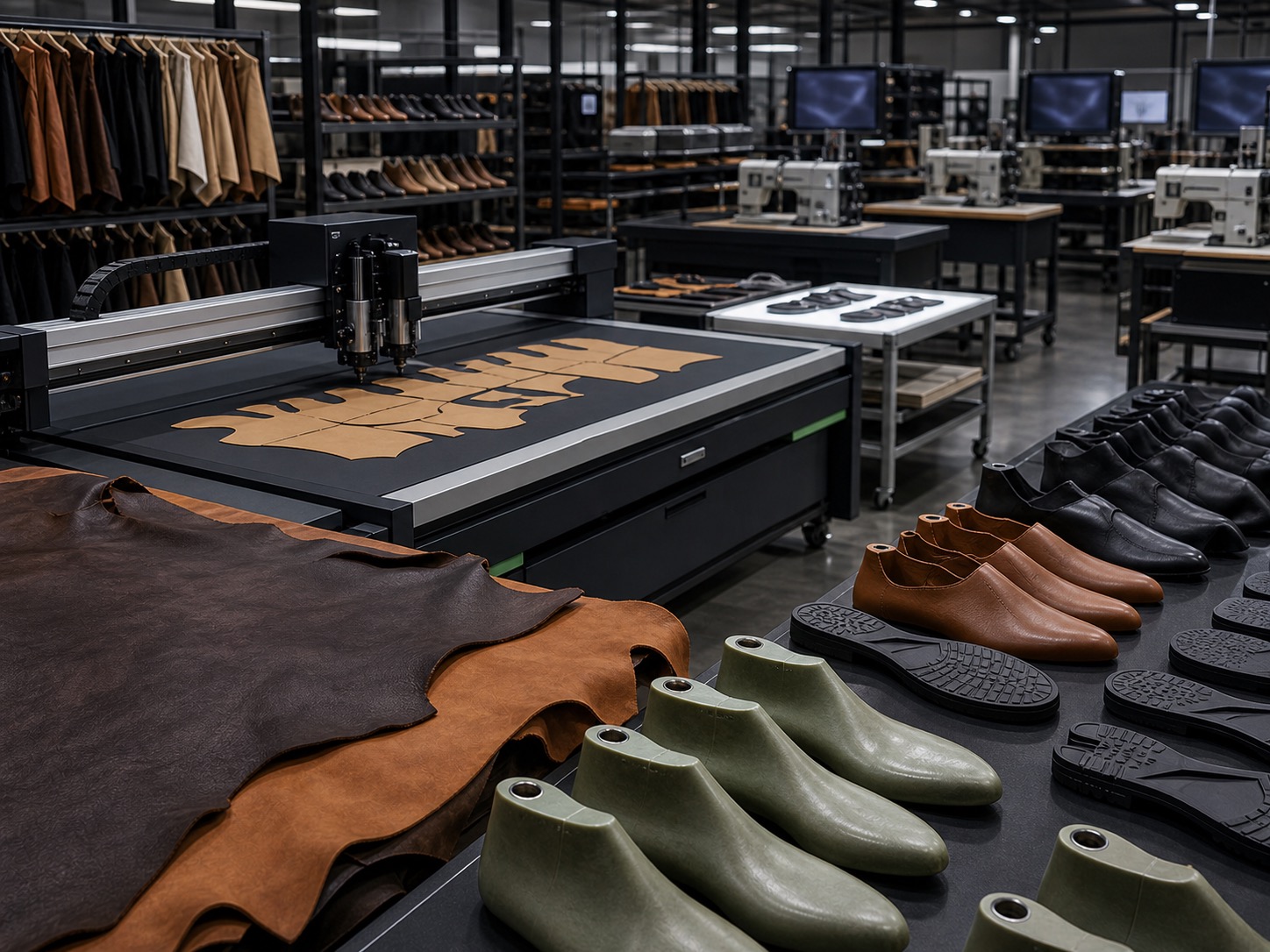
The art of the possible. None of the wins here are "AI runs your tannery." They are: every hide and chemical lot checked against the rate you actually agreed, so the overbilling hidden in hundreds of supplier invoices is caught before payment; the usable area recovered from each lot tracked so the yield leak (the single biggest cost line in leather) finally has a number and an owner; a buyer sample turned into a clean, complete, costed counter-offer in hours instead of days so you stop losing orders to slow sampling and stop quoting a price that forgot a component; leather issued against a style reconciled to output and to the job-work that came back, so the most expensive input on the floor stops walking; the BIS/QCO licences, the pollution-board consent and the GST calendar run to a system with a named owner instead of one person's memory; and your true cost-per-pair, true cash position and the leather sitting dead in stock visible every morning instead of four weeks late.
The operating reality
Leather is a yield business: usable area recovered from each hide is the single biggest cost line, yet it is rarely measured, and the most expensive input on the floor walks out unreconciled against output and job-work. The owner needs the rate agreed checked against every chemical and hide bill, the yield leak given a number and an owner, and true cost-per-pair visible every morning rather than four weeks late.
By segment
The same industry runs differently across its segments. Here is the operating reality of each, and the builds we would rank first, with why.
Buy raw hides and chemicals by the lot and convert them to finished leather; usable-area yield per lot, chemical-cost control and the long wet-to-finished cycle are the spine, and the pollution-board consent governs whether the unit can run at all.
Finished-leather rates move with hide and chemical costs, yet quotes are struck from memory; one costing template that carries true lot cost into the price stops a tannery selling finished leather below what the lot actually cost to make.
See what we buildYield, the usable area recovered from each lot, is the single biggest cost line in leather and is rarely measured; tracking issue-to-output by lot finally gives the yield leak a number and an owner.
See what we buildChemical bills, lot sheets and hide-purchase records arrive as messy paper; turning them into clean rows is the precondition for any rate check or yield number.
See what we buildHides and chemicals are the dominant spend and rates drift lot to lot; checking every bill against the rate agreed catches the overbilling hidden across hundreds of supplier invoices before payment.
See what we buildTanneries sell finished leather to a known trade of footwear and goods makers; a light listing surface widens the buyer base without rebuilding how the unit sells.
See what we buildBuyers and export agents check a tannery's articles, capacity and compliance before enquiring; a credible site is the standing proof of capability.
See what we buildEnquiries for specific articles and finishes arrive scattered across calls and messages; one front door captures and routes them so none is lost.
See what we buildRepeat orders for finished leather are predictable but unchased; a recorded follow-up cadence keeps regular buyers reordering instead of drifting.
See what we buildMake finished footwear to buyer samples and tech-packs, often for export against L/Cs and deadlines; sampling speed, costed counter-offers, leather-issued-against-style reconciliation and on-time shipment are the spine.
Orders are won or lost on how fast a buyer sample becomes a complete, costed counter-offer; a costing engine turns a sample around in hours instead of days and stops quotes that forgot a component.
See what we buildLeather is issued against a style and must be reconciled to output and to the job-work that came back; without it the most expensive input on the floor walks unaccounted between cutting, closing and the outsourced units.
See what we buildTech-packs, BOMs, buyer POs and export documents are dense paper; extracting them cleanly feeds the costing and the issue-against-style reconciliation.
See what we buildLeather, soles, components and trims come from many vendors against a fixed buyer price; checking bills to the rate agreed protects the thin export margin on every order.
See what we buildSourcing buyers and agents discover capable makers through trade listings; a presence widens the order pipeline beyond existing relationships.
See what we buildExport buyers vet a maker's articles, compliance and capacity online before a sample request; a credible site earns the first enquiry the work deserves.
See what we buildSample requests and order enquiries land across email, agents and WhatsApp; one front door captures every brief so a serious buyer is never dropped.
See what we buildA submitted sample that goes unchased loses the order to a faster maker; a recorded follow-up cadence keeps live samples and repeat seasons moving.
See what we buildMake higher-mix, lower-volume goods (bags, belts, gloves, wallets) across many SKUs and small batches; SKU-level costing, multi-component sourcing, cutting yield on small panels and a brand-facing storefront are the spine.
A wide SKU range with different leathers, linings and hardware makes per-SKU margin opaque; a costing view shows which articles earn and which quietly bleed across the catalogue.
See what we buildSmall panels cut from premium hides make cutting yield decisive, and components move through several hands; tracking issue-to-output keeps costly leather and fittings from leaking across the batch.
See what we buildMany small-vendor bills for hardware, lining and leather pile up; turning them into rows is what lets per-SKU cost and the rate check actually work.
See what we buildGoods makers buy a long tail of components from many small suppliers where rate creep hides easily; bill-to-rate checking recovers the margin that erodes one fitting at a time.
See what we buildAccessories sell well on consumer and B2B marketplaces; a managed listing surface opens a direct channel alongside trade orders.
See what we buildLeather goods carry a brand, and buyers expect a real storefront; a credible site that shows the range and converts is part of how the goods sell.
See what we buildCustom and bulk-gifting enquiries arrive scattered; one front door captures and routes them so high-value custom orders are not lost in a chat.
See what we buildWholesale and corporate-gifting buyers reorder seasonally; a recorded follow-up cadence turns one-off orders into a repeat book.
See what we buildSupply soles, uppers and components, or run cutting and stitching on job-work for footwear and goods makers; conversion-charge billing, material-issued-vs-returned reconciliation and on-time delivery against a principal's schedule are the spine.
Conversion and component work is priced per piece on thin rates; a costing view that holds true cost per operation stops the unit taking job-work below what the operation costs to run.
See what we buildMaterial issued by the principal versus product returned versus the conversion charge billed is the whole business; reconciling that gap, both ways, is where the unit's real margin is found or lost.
See what we buildChallans, issue notes and conversion invoices flow constantly between unit and principal; extracting them cleanly feeds the issued-versus-returned reconciliation.
See what we buildWhere the unit buys its own consumables and components, checking those bills to the rate agreed protects the slim conversion margin from input-cost creep.
See what we buildCapacity is sold to principals who find sub-contractors through trade networks; a listing surface helps fill idle lines beyond the current few buyers.
See what we buildPrincipals vetting a job-work partner check its capabilities and capacity; a credible site is the standing proof that wins the trial order.
See what we buildJob-work enquiries and capacity requests arrive informally; one front door captures them so a principal looking for a line gets a fast, complete response.
See what we buildJob-work relationships run on repeat allocation; a recorded follow-up cadence keeps principals sending the next batch instead of drifting to another unit.
See what we buildThe whole picture
Front office
How the business is found, sells, and is reached.
Back office
How the work actually gets done, day to day.
Talk to your data
One trusted picture you can read and ask questions of.
How an engagement works
01
A working session on your business, then a clear plan of what we would build and in what order, written down for you to keep. No cost, no obligation.
02
Go deeper on one area, or have us build the software, app or data layer. Fixed price. A focused build ships in weeks.
03
We keep it running and watch over it, as much or as little as you want.
Related industries
A free 60-minute call. No cost, no obligation, just a clear read on what is worth building.