01
Free: 60-minute call and Blueprint.
A working session on your business, then a clear plan of what we would build and in what order, written down for you to keep. No cost, no obligation.
Manufacturing
When rubber is the swing cost and curing decides the margin, the win is reading the buying, scrap and cure-reject leaks out of your own machine logs and registers, with every money, batch and price decision still signed by a named person.
The art of the possible
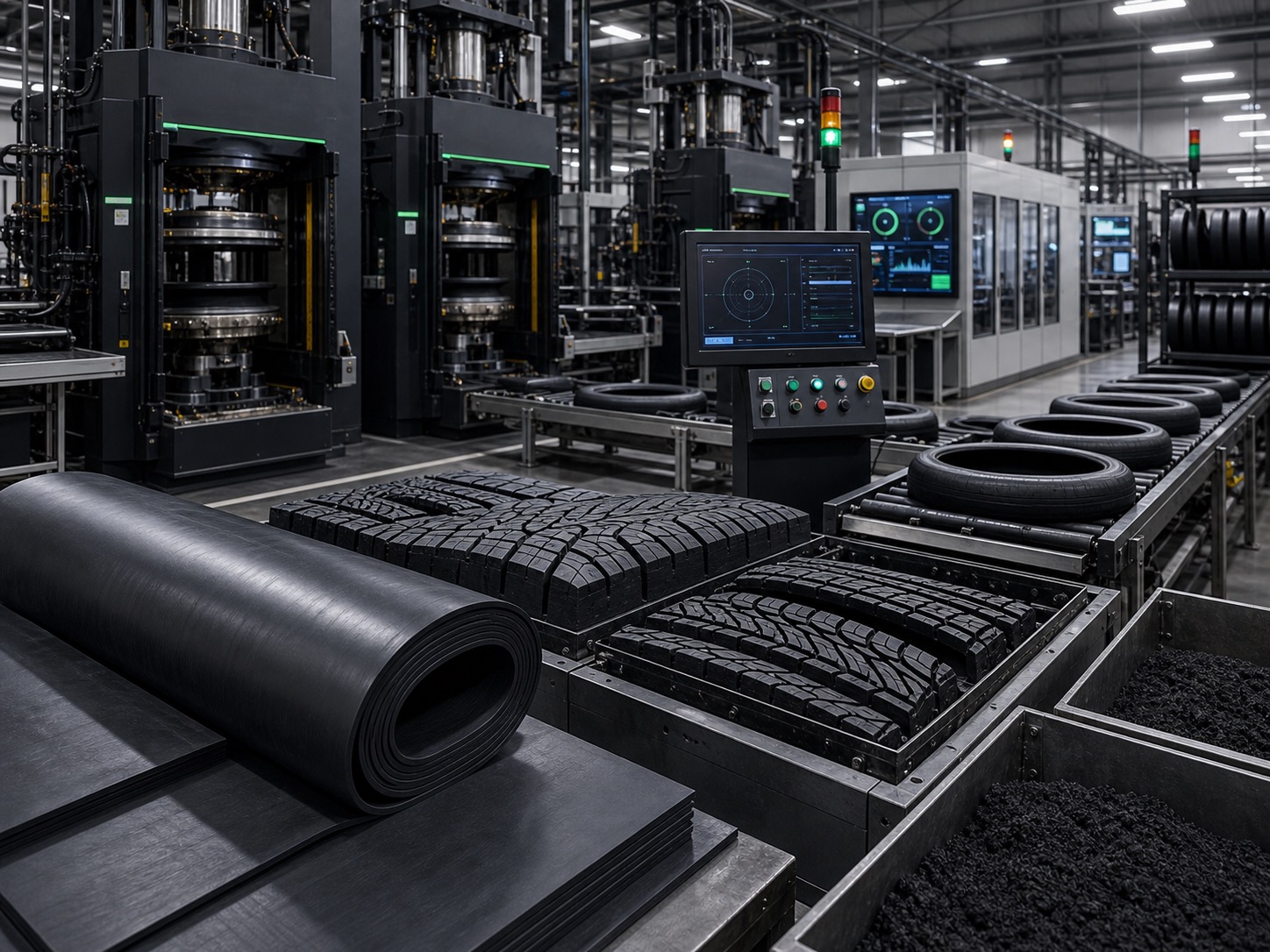
A rubber or tyre maker does not need a new plant system the floor will reject. It needs its machine logs, compounding records, buying and accounting tied into one trusted layer; the raw-rubber and carbon-black buying, the cure-cycle scrap and the recurring rejects read out of its own numbers; and the order book, WIP and margin on one screen the owner actually opens. Reliable systems and arithmetic carry most of the value; AI reads the messy paper and flags what matters; and the plant's process and safety are never left to a model, with a named person signing anything that touches money, stock, a batch or a price.
The operating reality
Compounding, moulding and curing businesses where natural and synthetic rubber, carbon black and process chemicals are the swing cost, and curing cycles, scrap and reject control decide the margin, yet the data sits across disconnected machine logs, registers and accounting. The work is to tie those sources into one trusted layer, read the buying, scrap and reject leaks out of the firm's own numbers, and keep any money, batch or price decision under a named person's sign-off.
By segment
The same industry runs differently across its segments. Here is the operating reality of each, and the builds we would rank first, with why.
High-volume curing on press and mould capacity sold through a distributor channel; rubber and carbon black are the swing cost, scrap and cure rejects are the quiet loss, and warranty claims ride back through the network.
Curing logs, the compounding record, the order book and accounting never talk; tying them into one source-linked layer is what every other read here depends on.
See what we buildOnce the layer holds, the owner can ask plain questions about scrap by press, cost by size or claims by batch and get the answer in seconds instead of waiting for the MIS.
See what we buildCure rejects, scrap and warranty claims by batch and press are recoverable money sitting in the firm's own production and claims record.
See what we buildA press drifting on cure time or scrap rate is caught in hours rather than at month-end, before a whole shift of output is lost.
See what we buildTrue cost and margin per size and per shift are invisible between month-ends; one screen makes the daily yield and scrap loss visible while it can be acted on.
See what we buildMixing, building and curing stages and any outsourced work are tracked in registers; structured capture makes WIP and stage scrap countable.
See what we buildNatural rubber, synthetic and carbon black are price-volatile and the dominant spend; checking each line against the agreed rate catches off-rate and over-quantity buying.
See what we buildDistributor warranty claims and field returns arrive as photos and messages; a light structured capture turns them into a tracked, analysable record.
See what we buildSupply auto OEMs and Tier-1s to tight tolerances against PPAP and quality documentation; rejects, rework and a missed delivery are penalised hard, and much of the work moves to and from job-work vendors.
Moulding logs, the quality record, customer schedules and accounting sit apart; one source-linked layer is the foundation for traceability and on-time supply.
See what we buildWith the layer in place, the team can ask which part, mould or customer is driving rejects without building a fresh report each time a Tier-1 asks.
See what we buildPPM rejects, rework hours and penalty deductions per part and customer are recoverable money hiding in the firm's own quality and despatch record.
See what we buildA mould or batch drifting out of tolerance is flagged before a customer line rejects a lot, which is the difference between scrap and a penalty.
See what we buildMargin per part after rework and the true cost of a quality escape are invisible until a claim lands; one screen surfaces it while it can still be fixed.
See what we buildMaterial sent to moulding and finishing vendors is reconciled by hand; structured capture stops over-measurement and ghost quantities at the handoff.
See what we buildCompounds and bought-out inserts are price-sensitive and customer-spec-bound; checking each line against the agreed rate and the right grade catches off-rate buying.
See what we buildPPAP packs, inspection reports and despatch traceability are demanded by customers but kept in spreadsheets; a light app makes them standing and audit-ready.
See what we buildLargely casing-in, casing-out job-work for fleets and dealers; tread rubber and bonding gum are the cost, per-casing economics and casing rejects decide the margin, and the casing belongs to the customer.
Casing receipts, the process record and customer billing live separately; one source-linked layer ties each casing from inward to despatch and bill.
See what we buildWith the layer in place, the owner can ask which fleet, tread or process is losing money per casing and get the answer without an analyst building it.
See what we buildCasings rejected after processing, unbilled work and tread-rubber wastage per casing are recoverable money in the firm's own job record.
See what we buildA spike in casing rejects or tread consumption per job is flagged early, before a week of low-yield work passes unnoticed.
See what we buildTrue cost and margin per casing and per fleet customer are invisible; one screen shows which accounts are quietly unprofitable.
See what we buildCasing-in to casing-out is the whole business; goods-in versus goods-out versus rejects versus charge-billed per casing is the core that must be tracked tightly.
See what we buildTread rubber, bonding gum and repair material are the main spend; checking each line against the agreed rate catches off-rate buying and short supply.
See what we buildCasing intake photos, condition notes and customer ownership are captured loosely; a light app makes each customer-owned casing tracked and disputable with evidence.
See what we buildSpec-driven, made-to-order industrial products with long fabrication cycles, material certificates and project-linked supply; under-costed quotes and material certification gaps are the recurring loss.
Quoting, the fabrication record, material certs and billing sit in separate places; one source-linked layer ties each order from quote to despatch.
See what we buildOnce the layer holds, the team can ask which order or spec is bleeding margin and which certs are pending without rebuilding a report each time.
See what we buildUnder-costed quotes, unbilled site changes and material wastage on long jobs are recoverable money sitting in the firm's own order record.
See what we buildA job trending over its material or hour estimate is flagged while it runs, not discovered as a loss after handover.
See what we buildTrue margin per order and per spec is only known at handover today; one screen makes it visible while the project is still live.
See what we buildMulti-stage fabrication and any outsourced steps are tracked on paper; structured capture makes WIP and stage cost on long jobs countable.
See what we buildFabric, steel cord, compounds and fittings are project-specific big-ticket buys; checking each line against the agreed rate catches the overbilling hidden in large orders.
See what we buildMaterial test certificates and spec compliance per order are demanded by industrial buyers; a light app keeps the certification pack build-ready rather than reassembled per dispatch.
See what we buildThe whole picture
Front office
How the business is found, sells, and is reached.
Back office
How the work actually gets done, day to day.
Talk to your data
One trusted picture you can read and ask questions of.
How an engagement works
01
A working session on your business, then a clear plan of what we would build and in what order, written down for you to keep. No cost, no obligation.
02
Go deeper on one area, or have us build the software, app or data layer. Fixed price. A focused build ships in weeks.
03
We keep it running and watch over it, as much or as little as you want.
Related industries
A free 60-minute call. No cost, no obligation, just a clear read on what is worth building.